Home » Blog » Artificial Intelligence
What Role Does Artificial Intelligence Play in the Boardroom?
How AI is redefining boardroom priorities and what new questions decision-makers should ask regarding investment, competitiveness, and growth.
Why Choose The Flock?

+15.000 top-tier remote devs
Payroll & Compliance
Backlog Management
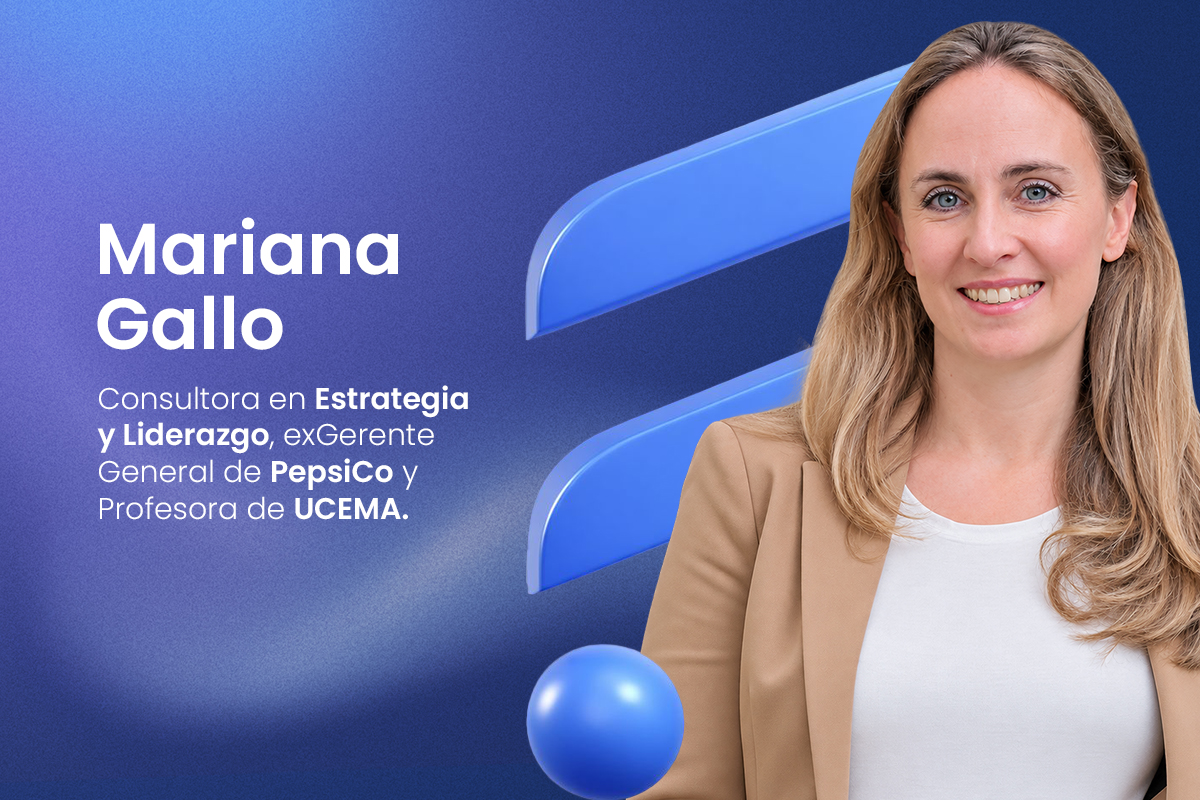
Over the past three years, artificial intelligence has entered organizations through the door of experimentation. Teams were testing tools, pilots in different areas, innovation budgets. And I think it was good that it happened that way: first, we needed to learn, lose the fear, and start thinking differently.
I also believe that today this experimentation needs to coexist with a greater demand for results and responsibility. AI is no longer a topic that the board can delegate to the technology area and review once a year. It touches strategy, cost structure, business model, risk management, and most importantly, people. Waiting for others to test and then catching up is no longer a sufficient strategy: by the time we arrive, the technology has already changed. It's no longer enough to ask what will happen next year; the question is what's happening now.
The speed changes the role of the board. It's no longer just about approving or halting technology investments but about asking the right questions. The board defines priorities, requests evidence, and supervises; the executive management carries out the implementation. I propose four questions to you.
1. What growth opportunities are we opening with AI?
The first conversation about AI in many companies was about efficiency: doing the same thing faster and at a lower cost, but without focusing on the opportunity. Efficiency has a ceiling (100%); growth does not. We also need to ask ourselves what new revenues, markets, and proposals we can develop.
A simple example a colleague shared with me helps to imagine this: a family-owned flower shop that incorporates a CRM and an AI agent to handle inquiries and take orders. The combination of these tools with operational changes can allow it to extend its service hours, reach new neighborhoods, or develop a line of sales to businesses. The opportunity goes beyond "saving time in responding": it opens up space for growth.
Another risk is automating the existing process without questioning if it still makes sense. An automated process is faster, but not necessarily better.
The question the board should bring to the table is not just where we can save, but what we could do that we are not doing today: what markets, what products, what customers are now within our reach.
2. How do we measure the value it generates and the risks we assume?
During the learning phase, many recommended not obsessing over returns, but today I believe we need greater discipline in measuring. I'll give you two reasons:
The first is economic because the AI bill is starting to arrive. The consumption of "AI credits" is growing, and costs we hadn't budgeted for may appear. Choosing the most powerful model for any task can be expensive without providing an equivalent benefit.
The second is to think a little more. Before measuring value, we need to ask again what value is. This technology is available to us, to our competitors, and to those who do not yet compete with us but could do so tomorrow. As certain capabilities become accessible to everyone, we need to understand where we will build a difference.
Therefore, each initiative needs a clear business objective, indicators, and accountability. It also requires reviewing costs, data quality, and security. Connecting agents to the company's context requires reliable information and prepared processes.
But measuring results is not enough. The board also needs to ask what decisions an agent can make, which require human authorization, and who is accountable when something goes wrong. And it needs to understand what dependency we are building on certain providers and what risks we are willing to take.
The question for the board: what evidence on results and risks would allow us to decide whether to scale, adjust, or stop?
3. How are we preparing people to transform the business?
According to the World Economic Forum's Future of Jobs Report 2025, by 2030, about 170 million jobs will be created, and 92 million will be displaced. This projection considers various transformations, including technological change, the green transition, and demographic changes; it is not an effect solely attributable to AI.
While the balance is positive, new jobs do not necessarily appear in the same place or for the same people who lose theirs. There is a responsibility that also belongs to the board.
I believe there is a temptation to view AI as a license to cut costs. But transforming the business requires the people who know it. If we remove those who understand our customers, our processes, and our culture, who will redesign the company to work with agents? Transforming while continuing to operate requires preserving that knowledge and developing new capabilities.
The role of people also changes. As we delegate tasks to agents, knowing how to supervise them, define how far they can act alone, and when they need to notify us becomes more important. That requires business knowledge, new skills, and time to learn.
Investment in technology needs to be accompanied by an investment in people and new ways of working, in line with the transformation we seek.
The question: are we developing the criteria to work with AI?
4. Where do we want to preserve human intervention because it makes a difference?
In recent years, we have asked what we could do better with AI. In the coming years, the reverse question will be equally strategic: what do we choose to leave in human hands? When everyone has access to similar tools, many things will look alike. Presentations, texts, even processes. We need to think about where we want to build a difference.
I heard an expression from a colleague that I find valuable: "human by choice." Choosing human intervention because it adds something we want to preserve in our value proposition.
That choice coexists with another responsibility, maintaining human oversight where a certain risk threshold is exceeded. It's one thing to decide that a person reviews a decision for its possible consequences; it's another to choose human contact because it's part of what the customer values.
There are moments when judgment, empathy, and trust make the difference. An AI that resolves a procedure in seconds can offer a great experience. A chatbot that responds with a script when someone is in a critical situation can create a poor experience.
Choosing what to keep in human hands is also a positioning decision. The question for the board: in what moments does a person make a difference for our customers?
AI on the Agenda
Therefore, the place of artificial intelligence at the board table is not just another agenda item because it permeates all topics: growth strategy, capital allocation, risk management, talent development, and customer value proposition.
Now that it's so easy to get answers, what becomes scarce are good questions. I think that's the most valuable contribution a board can make today: ensuring that the organization is asking the right questions and demanding evidence to evaluate the answers.
For the next board meeting, I propose starting with these four:
1. What could we do that we are not doing today?
2. What evidence on results and risks would allow us to decide whether to scale, adjust, or stop?
3. Are we developing the criteria to work with AI?
4. In what moments does a person make a difference for our customers?
Why Choose The Flock?
+15.000 top-tier remote devs
Payroll & Compliance
Backlog Management