Home » Blog » Artificial Intelligence
Communication as a Vehicle for Building Realities in Technological Transformation Processes
Discover how communication, culture, and change management can accelerate AI adoption across organizations.
Why Choose The Flock?

+15.000 top-tier remote devs
Payroll & Compliance
Backlog Management
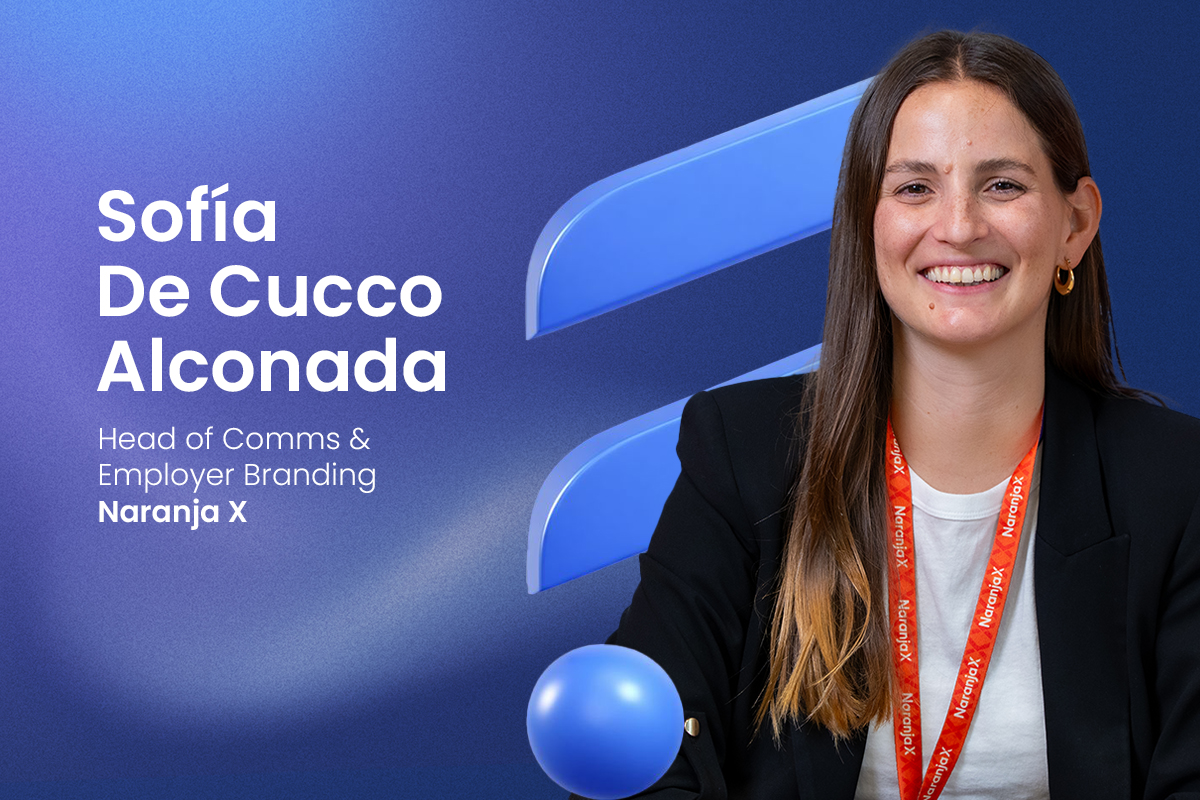
For years, talent management responded to each technological leap with similar solutions: creating courses, conducting workshops, and measuring completion rates. The emergence of Generative and Agentic Artificial Intelligence has proven that this roadmap is outdated and that transformations are never just about technology; they are profoundly human transformations.
This is because there is a deep-rooted belief that adoption is a technical instruction problem. It is not. Training teaches how to use a tool, but it is cultural awareness that creates realities, dispels myths, and enables possible worlds. At Naranja X — where we evolved from a garage in Córdoba in 1969 to become Argentina's second-largest financial app with over 10 million customers — we learned that the cultural framework we provide to technology is as crucial as skill development.
Why? Because when communication does not prepare the ground, the speed of change creates paralysis instead of adoption. We see this in our pulse surveys, where we identify a paradox that runs through the entire industry: even within the same profiles, there is a high enthusiasm for productivity alongside a deep insecurity about how to demonstrate value in this new scenario or a lack of clarity regarding why the use of new tools is being promoted. Added to this map is the double challenge faced by team leaders and middle managers, who act as the hinge absorbing the most mental load and must maintain daily value delivery while relearning and redesigning their own roles.
To build everyday awareness, dispel myths, clear operational anxiety, and help minimize cognitive fatigue, at Naranja X we constantly deploy open initiatives like our AI Fridays, Learning Communities, and visibility spaces like the AI First Showcases, where teams present real use cases and learn in a hands-on and collaborative manner. But above all, we aim to instill a clear methodology like the ESA framework (Eliminate >> Simplify >> Automate): first testing value and simplifying, to avoid automating large processes that are poorly conceived from the start.
This philosophy in action is what transforms the way we work, and our own People team is a great example. In the past year, we analyzed over 90 macro-processes and identified that 100% of them can be intervened with AI. We started with our everyday experience: with the People Assistant, a natural language conversational assistant that allows people to make inquiries and manage their daily tasks, we processed over 50,000 annual inquiries with a response time of 4.6 seconds and a 92% satisfaction rate. But the key data is not speed or efficiency alone: the true victory is that by eliminating transactional friction, culture and technology have given the team back the time to hold high-value, impactful human conversations.
In a market where tools are democratized and technology stacks are homogenized, the strategic differentiator will be in why we use technology and how we generate a shared sense of purpose within the organization. In this sense, communication is one of the great forces that enables each collaborator to understand that AI is not here to replace them but to free their strategic capacity and most human abilities, elevating the value delivery to customers. When an organization achieves that people are committed to the purpose, lose fear, and dare to try, culture becomes what it always should be: the most powerful accelerator of the business.
FAQs on Communication and AI Adoption
1. What role does communication play in a technological transformation?
Communication helps explain why a new technology is being introduced, what problems it seeks to solve, and how it will impact people's work. This can reduce uncertainty and facilitate adoption within the organization.
2. Why is training not enough to achieve AI adoption?
Training teaches how to use tools, but adoption also depends on people understanding why to use AI, how it can add value, and what role it will play in their daily work.
3. How can companies reduce resistance to artificial intelligence?
They can create learning spaces, showcase real use cases, clearly communicate the purpose of the technology, and allow teams to experiment with it in concrete situations.
4. What role do leaders play in AI adoption?
Leaders and middle managers help translate the technological strategy into daily work. They also support teams as processes, responsibilities, and ways of generating value change.
5. What is the ESA framework: Eliminate, Simplify, Automate?
It is an approach that proposes first eliminating tasks that do not generate value, simplifying necessary processes, and only then automating them. The goal is to avoid automating inefficient processes.
6. How does Naranja X use AI in its internal processes?
Naranja X applies Artificial Intelligence to transform the experience of its nearly 10 million customers. Based on its technology and more than 40 years of financial history and behavioral data, it uses AI and generative models in four areas: hyper-personalization, product development, customer service, and process automation. In People, for example, it identified opportunities for AI application in more than 90 macro-processes, with the aim of freeing teams from repetitive tasks and enhancing their strategic and human contribution.
Why Choose The Flock?
+15.000 top-tier remote devs
Payroll & Compliance
Backlog Management